
What is Periodontal Disease?
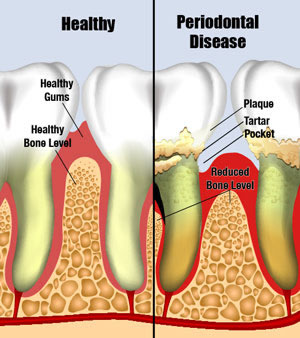
The word “periodontal” literally means “around the tooth”. Periodontal disease (also known as “gum disease”, “pyorrhea” or “periodontal infection”) is an ongoing bacterial infection in the gums and bone around your teeth. This infection leads to an inflammation under the gums, and if not treated, this inflammation can destroy the bone around your teeth. This results in tooth loss.
75% of all adult tooth loss is due to periodontal infection.
More importantly, research has associated periodontal infection to several serious medical problems, including heart disease, diabetes and stroke (see the “The Mouth-Body Connection” section). As ongoing research continues to define how periodontal disease is associated with these and other health problems, oral health maintenance is essential. Periodontal health is a key component to a healthy body.
What is an "Ongoing Infection"?
Have you ever gotten a sliver of wood caught under the skin of your hand? Because the wound is open to bacteria, the site may become infected and so appear red and inflamed. In time, your immune system fights off the bacteria and your hand heals.
During an ongoing infection , however, your immune system is unable to conquer the bacteria on its own and the pain and redness continue to worsen.
Periodontal disease is an ongoing infection in the pockets around your teeth. You cannot fight off the infection alone, but with periodontal therapy, we are able to remove debris and bacteria from the site, allowing the gum to heal as your hand had.
What Can Cause a "Burst" of Infection Activity?
People with periodontal disease have low resistance to periodontal bacteria. This causes an ongoing gum infection that grows in “bursts” of activity. Each time it grows, more support for your teeth is lost. Some factors that can cause a “burst” of activity are:
- Poor oral hygiene
- Dental plaque
- Smoking
- Genetic factors
- Stress or tension
- Diet
- Age
- Illness

Symptoms of Periodontal Infection
Periodontal infection is usually painless until it reaches an advanced stage. However, there are some symptoms which can indicate the presence of periodontal infection.
Red or swollen gums
Bleeding when brushing (pink toothbrush), or at other times
Aching, itchy, sore or tender gums
Receding gums (teeth beginning to look longer)
Pus between your teeth and gums when you press down on the gums
Bad breath
Any change in the way your teeth fit together when you bite
Any change in the fit of partial dentures
Loose, separating or protruding teeth
Spaces between teeth
Who is a Periodontist?
A periodontist is a dentist who specializes in the prevention, diagnosis and treatment of periodontal disease. Many periodontists have also taken advanced training in the placement of dental implants. Periodontists receive extensive training in these areas, including 2 to 3 additional years of education beyond dental school. Periodontics is one of the 8 specialties recognized by the American Dental Association.
Periodontists also provide other treatments, such as crown lengthening and bone regeneration (see the Procedures section for more information on these procedures).
Why Choose our office
At our periodontal practice, we believe in delivering far more than just dental care — we aim to provide an experience that’s comfortable, trustworthy, and results-driven.
Here’s what sets us apart:
Specialized Expertise
Our doctors are skilled in advanced gum therapy, dental implants, and full-mouth restorations — giving you access to top-tier periodontal care under one roof.
Patient Comfort & Communication
We know dental procedures can be stressful. We take the time to explain your diagnosis, walk you through all treatment options, and answer every question in clear, understandable terms.
Personalized Treatment Planning
Every smile is different. We build a care plan tailored to your unique needs, whether it’s a routine cleaning, implant placement, or a complete smile restoration.
Cutting-edge Technology & Techniques
We use modern periodontal and implant technologies to ensure precision, faster healing, and long-lasting results.
Long-term Oral Health Commitment
Our focus isn’t just on immediate results — we aim to preserve and enhance your gum and bone health for years to come.
Frequently Asked Questions
It can be managed and controlled, but advanced cases require ongoing maintenance to keep infection under control.
It can be managed and controlled, but advanced cases require ongoing maintenance to keep infection under control.
It can be managed and controlled, but advanced cases require ongoing maintenance to keep infection under control.
It can be managed and controlled, but advanced cases require ongoing maintenance to keep infection under control.
It can be managed and controlled, but advanced cases require ongoing maintenance to keep infection under control.
It can be managed and controlled, but advanced cases require ongoing maintenance to keep infection under control.